Shipping Notes, 18 August 2026: The Fortnight the SEO Was Never Rendered
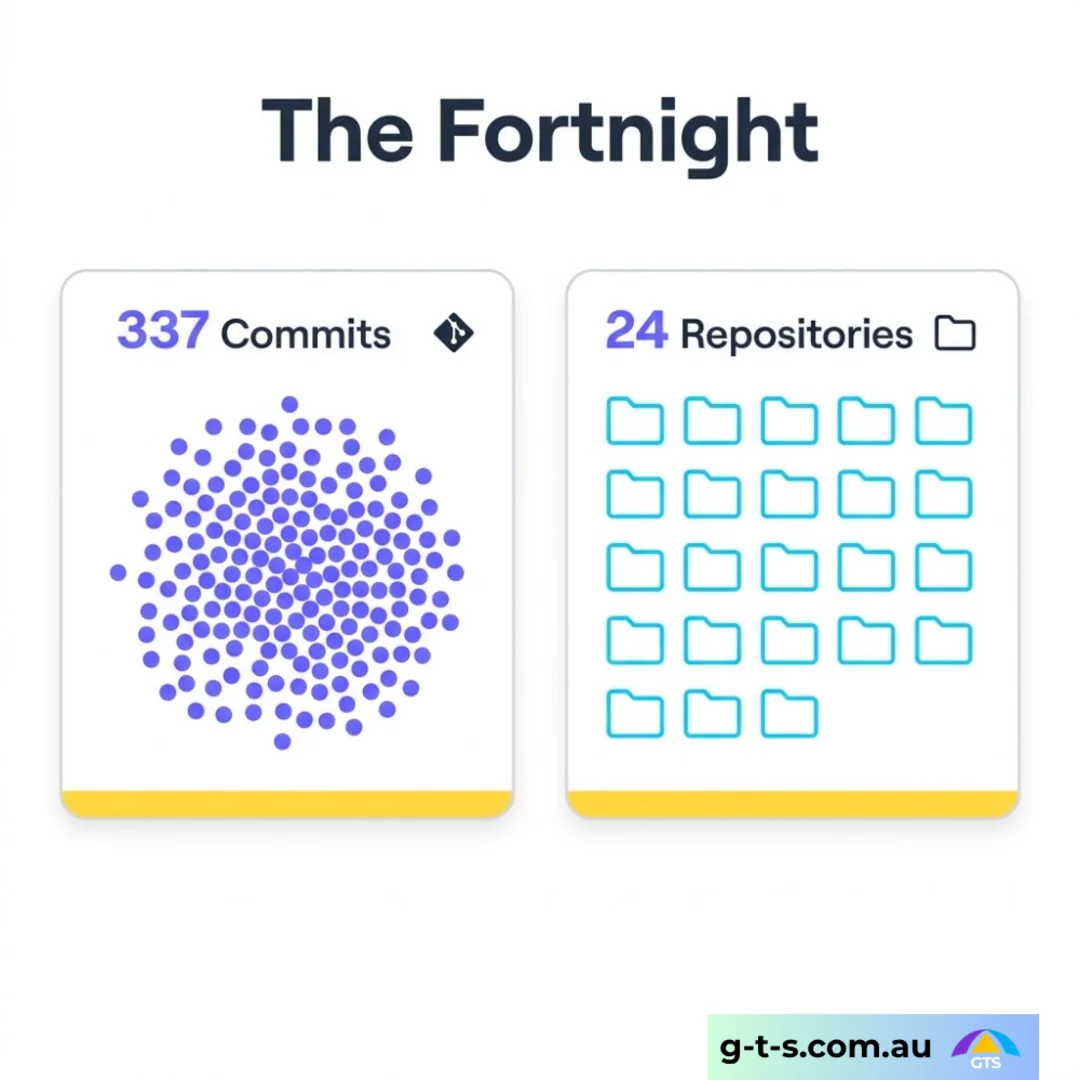
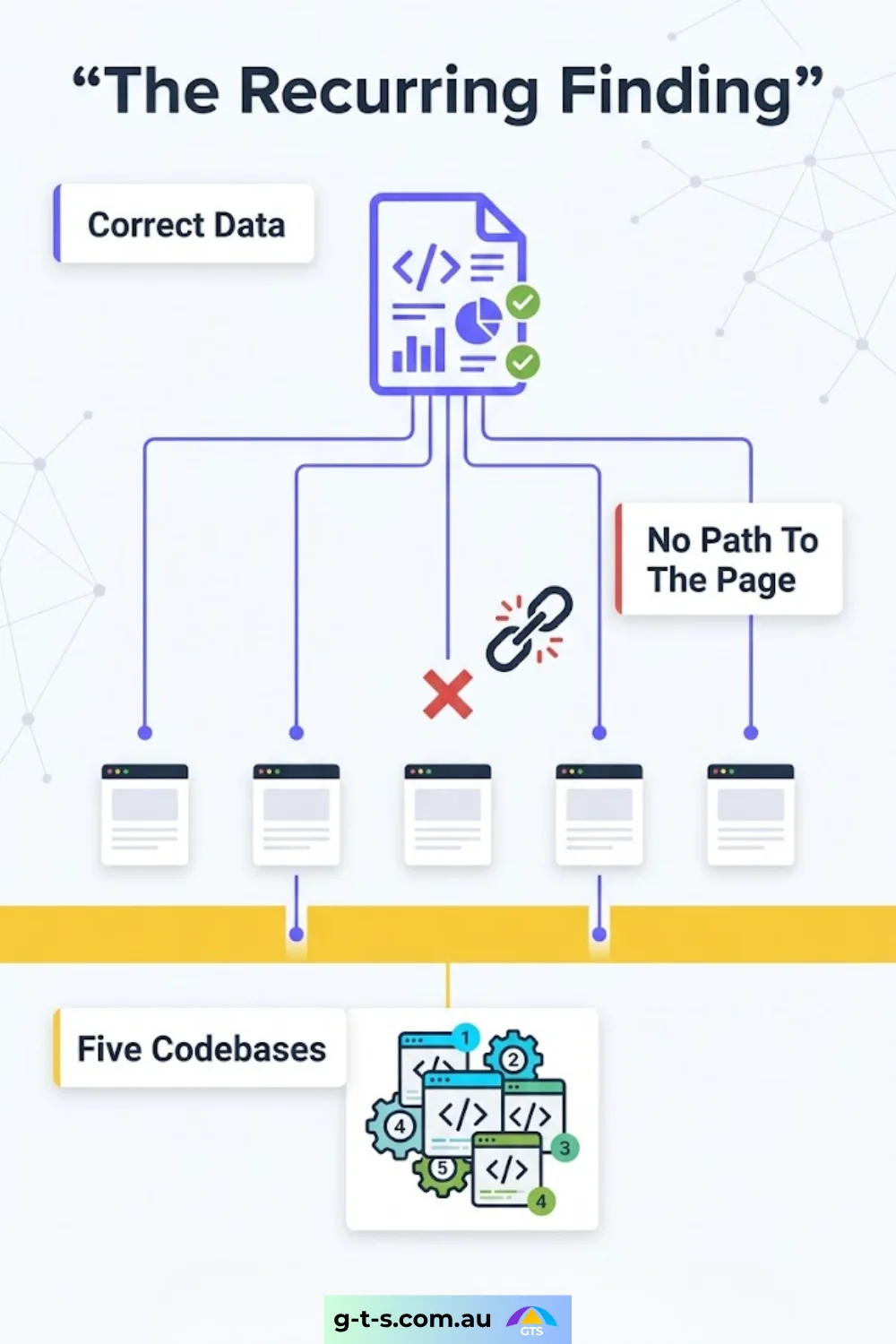
337 commits across 24 repositories in a fortnight. The dominant finding repeated itself in five separate codebases: the feature was built, shipped, and never actually appeared on the page.
Every fortnight we publish what actually shipped across the group.
337 commits across 24 repositories. The last edition was about discovering that things we had recorded as done were not working. This one is the sequel, and it has a sharper edge: the recurring finding was not that the work was wrong, but that correct work never reached the page.
Five separate codebases, five instances of the same shape. That stops being a bug and starts being a lesson about how we verify.
The numbers
| Division | Commits |
|---|---|
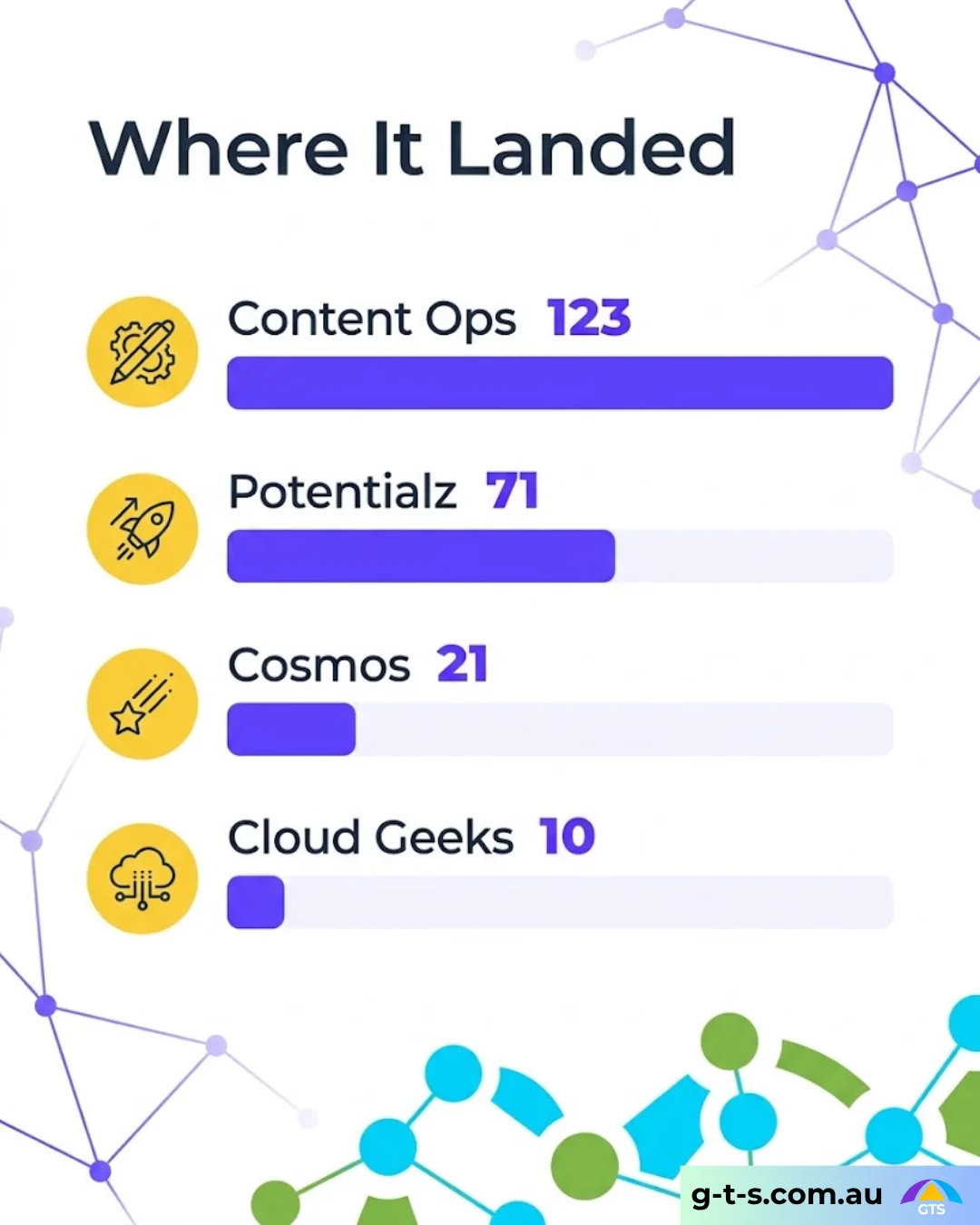
| Content operations | 123 |
| Other / internal tooling | 84 |
| Potentialz | 71 |
| Cosmos Web Tech | 21 |
| Ash Ganda | 12 |
| Awesome Apps | 12 |
| Cloud Geeks | 10 |
| Ganda Tech Services | 4 |
By category: web/SEO 112, content 102, AI agents 58, mobile 12, cloud 8, cybersecurity 7. Split 122 content commits to 215 code commits.
The finding: correct data, no path to the page
1,277 internal links that existed only in the repository
Two sites carried lists of related posts in their content files — 606 on one, 671 on the other. Correctly formatted. Pointing at real published pages. Generated months ago by a cross-linking pass that reported success and was, on its own terms, right.
No template read the field. The content schema accepted it, so nothing complained. The build succeeded. Every link existed only in the source.
Measured on the built output, which is the only place link equity is visible:
| Related links | |
|---|---|
| Before | 0 across 634 pages |
| After | 606 anchors across 219 pages, 0 dead |
Four of the declared links pointed at posts that had since been removed, and would have shipped as dead internal links had we rendered them naively. They are dropped.
Article schema present in the layout, never fed with data
The same shape, in a different feature. The markup for article structured data was sitting in the page layout on multiple sites and had never been given anything to render. On Awesome Apps that covered 447 posts. On this site — the parent — there was no article schema at all, and the Twitter card image was an SVG, which Twitter does not accept.
1,318 links whose anchor text was a URL slug
On Ash Ganda, the related links did render — with the raw slug as the visible text.
verification-that-cannot-fail where a human would have written the title. Present,
counted by any link audit, and worthless as a relevance signal.
The audit itself was reading the wrong thing
The reason all of this survived previous audits is that the audits read source files. Source was correct in every case. We rebuilt the audit to run the build and read the shipped HTML, and the baseline moved by 3,226 links — not because anything changed, but because the previous measurement could not see them.
We also added a link-equity gate with an actual threshold: three incoming references and three outgoing links per post, below which the check fails rather than merely notes. It failed immediately on real pages, which is how you know it works.
The lesson, stated plainly: measure the artifact your reader receives, not the one your team authored. Those two are identical almost always, which is precisely what makes the exception expensive.
Also shipped
Content operations (123 commits). A long-form video pipeline for the group’s channels — slide bed, word-onset timing for captions, and a composite render pass — plus a social sender that uploads, creates the post, attaches the media, and then reads it back to prove the media actually landed. Per-platform variants at 4:5, 2:3 and 1.91:1 derived from a single hero image, with no image-generation cost.
Potentialz (71 commits). Five clinical posts published, each translated into five languages, each with promotional video in six channel formats. Alongside that, a technical SEO pass: 35 orphaned posts taken from zero inbound links to at least two, 16 service pages re-optimised for titles, headings and FAQ coverage, and an entity and opening-hours correction.
Cosmos Web Tech (21 commits). Two competing posts about accounting firm websites merged into one, the loser 301’d, and the two internal references the deletion left behind repointed. Image kits wired into three posts where the artwork existed on disk but was never referenced.
Awesome Apps (12 commits). A public account-deletion page for the Google Play data safety requirement, and a correction to a retention claim that stated five years where three was both accurate and sufficient. Neither store had ever asked for five.
Cloud Geeks (10 commits). Internal links rendered, bespoke hero images for the six suburb pages, and two posts staged for the next cycle.
Internal tooling (84 commits). A media-archive module built on a rule we had to learn the hard way — verify, then delete, in that order — and a barrier check that now requires specific named gates to have passed rather than merely some gates.
What went wrong
Three things worth recording, in the spirit of these notes.
Six failures that each exited 0. A render chain completed successfully having produced nothing; six internal stages had failed and been caught by handlers that logged and continued. Separately: a delete that reported success and deleted nothing, a model provider outage that wrote a placeholder and exited cleanly, and a publishing workflow that had silently stopped triggering because the pushes came from an automated account.
Three short videos published a five-second placeholder. A hosting service returns a URL as soon as the upload completes, before conversion finishes. The URL resolves. It is not the video yet. Six posts ingested the placeholder and three published it before anyone looked. The fix is to poll for conversion completion and verify the duration before treating the URL as real.
A three-day model deprecation notice. A provider decommissioned models with three days’ warning; two of our systems depended on them. Both migrated inside the window. The uncomfortable part was that one of them would have failed silently, having caught the provider error and written a placeholder.
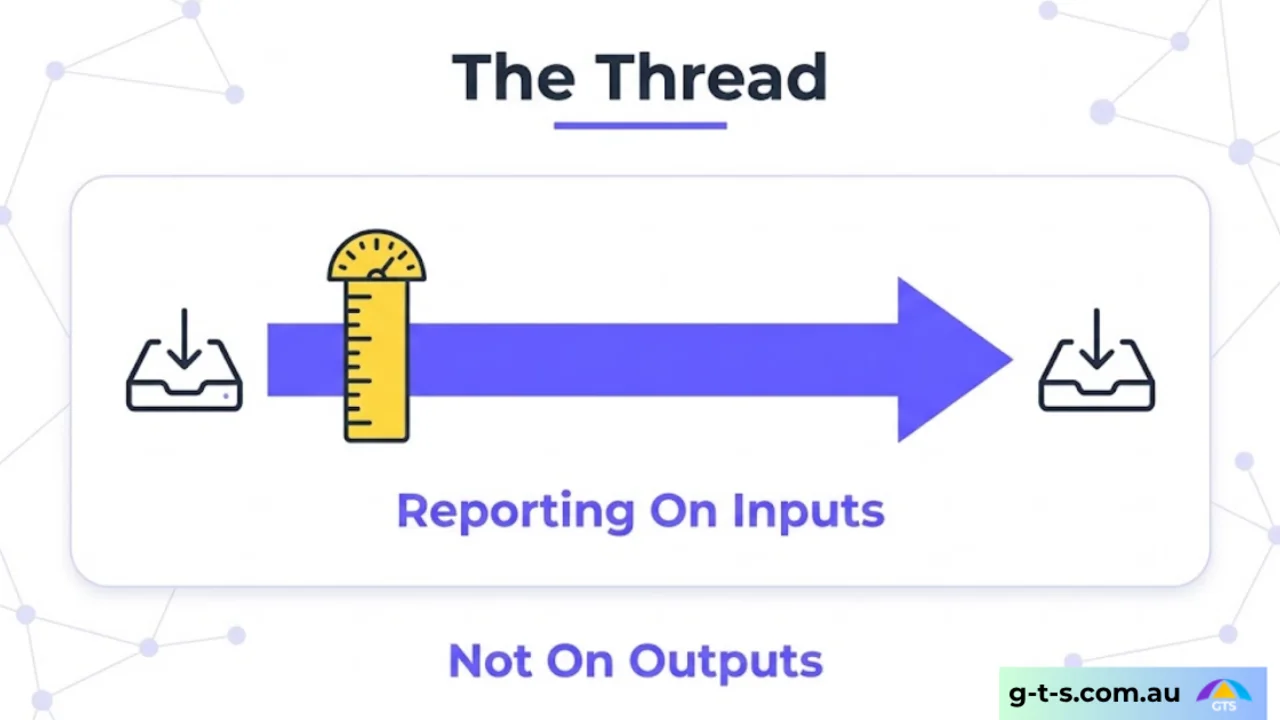
The thread
Every item in the “what went wrong” list is the same failure as the headline finding, wearing different clothes: a system reporting on its own inputs rather than its outputs.
The cross-linking pass reported 606 links written. True. The render chain reported success. True. The delete reported completion. True. In each case the report described what the process had attempted, and nobody was checking what it had produced.
That is the working discipline we are taking into the next fortnight, and it is cheaper to adopt than to discover.
GTS builds and runs digital systems for Australian businesses through four divisions: Cosmos Web Tech for web design and SEO, CloudGeeks for cloud, managed IT and cybersecurity, Awesome Apps for mobile applications, and Ash Ganda for AI and technology strategy. These notes are published fortnightly from the actual commit history.