Shipping Notes, 1 September 2026: The Fortnight of Checks That Never Ran
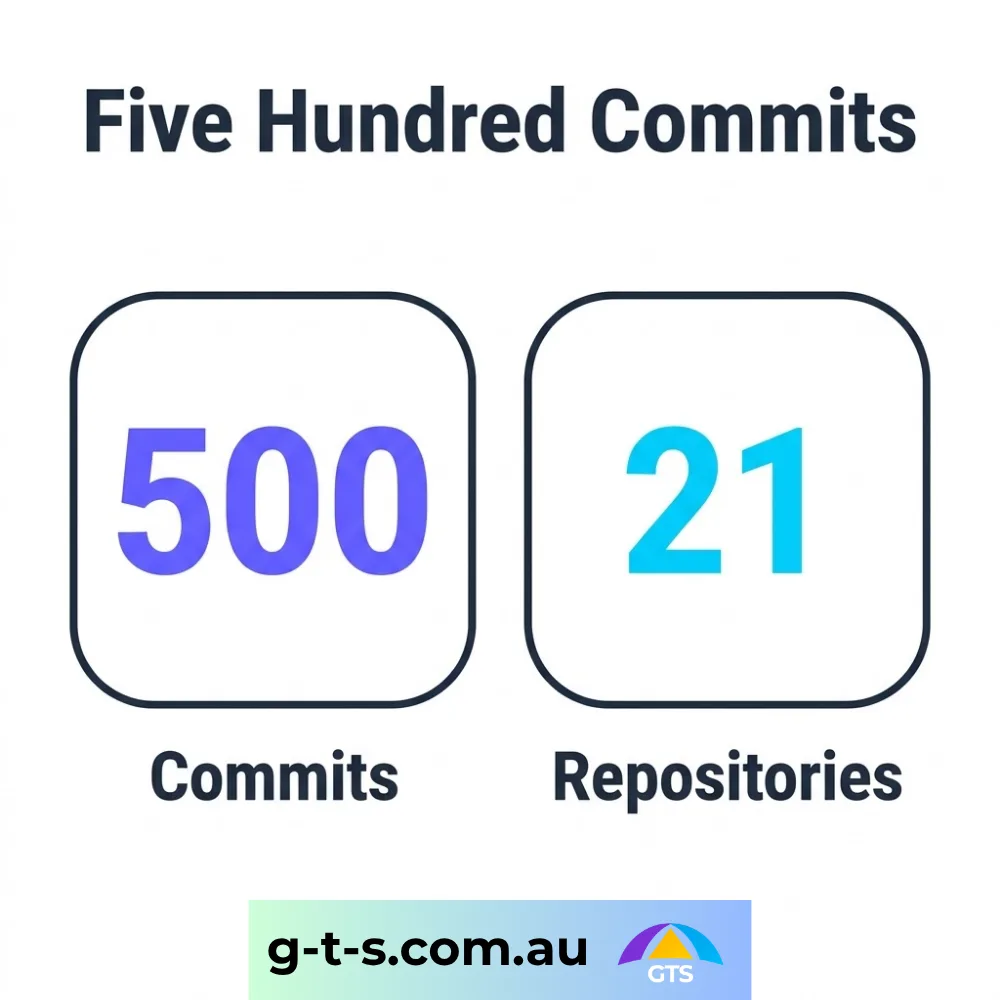
500 commits across 21 repositories. The recurring finding was not a missing safeguard — it was a safeguard that existed, was documented as existing, and had never once executed. We found nine of them in six codebases.
Every fortnight we publish what actually shipped across the group.
500 commits across 21 repositories. The last edition was about correct work that never reached the page. This one is the next layer down: the checks that were supposed to catch that, and which had never run.
Not missing. Present, documented, and inert.
The numbers
Five hundred commits, twenty-one repositories, fourteen days. The heaviest were the content pipeline at 88, the Potentialz site at 75 and the Brain Reset video work at 53.
Nine of the findings share one shape, and it is worth naming precisely: a control that exists in the codebase, is referenced in documentation as active, and is never invoked by the path it is meant to protect.
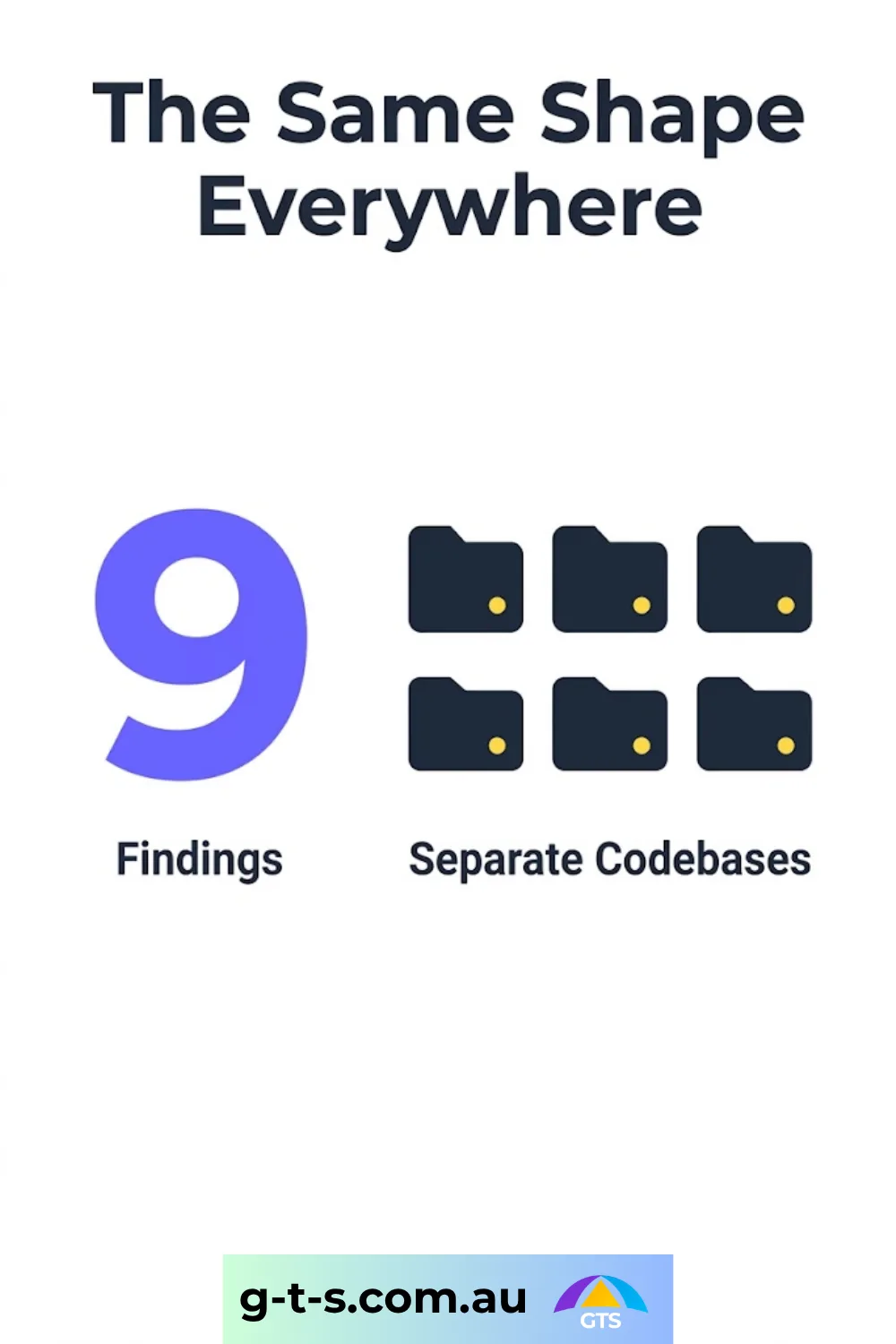
The finding: present, documented, inert
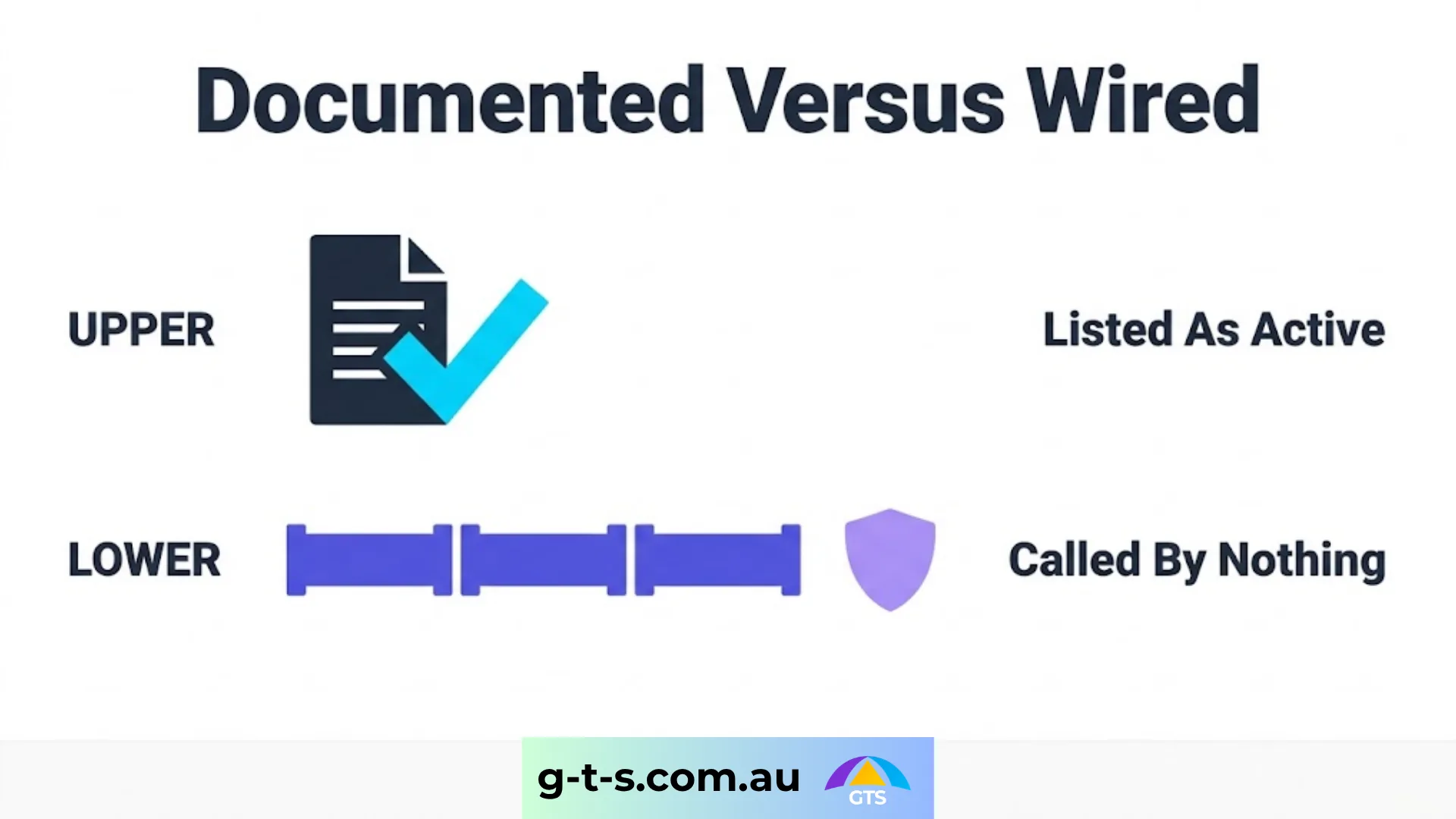
A lint that was listed as active and called by nothing
The clearest case. A narration checker existed as a script. The gates README listed it as stage one with a tick beside it. Nothing in the render chain called it.
Underneath that, two more failures in the same file. The local copy had drifted to 95 lines against the shared module’s 128 — so fixes made upstream had never arrived here. And the runner passed an empty value for the on-screen layer, which meant that half of the check could not fire even if something had called it.
Three ways of not working at once, behind a green tick in a README.
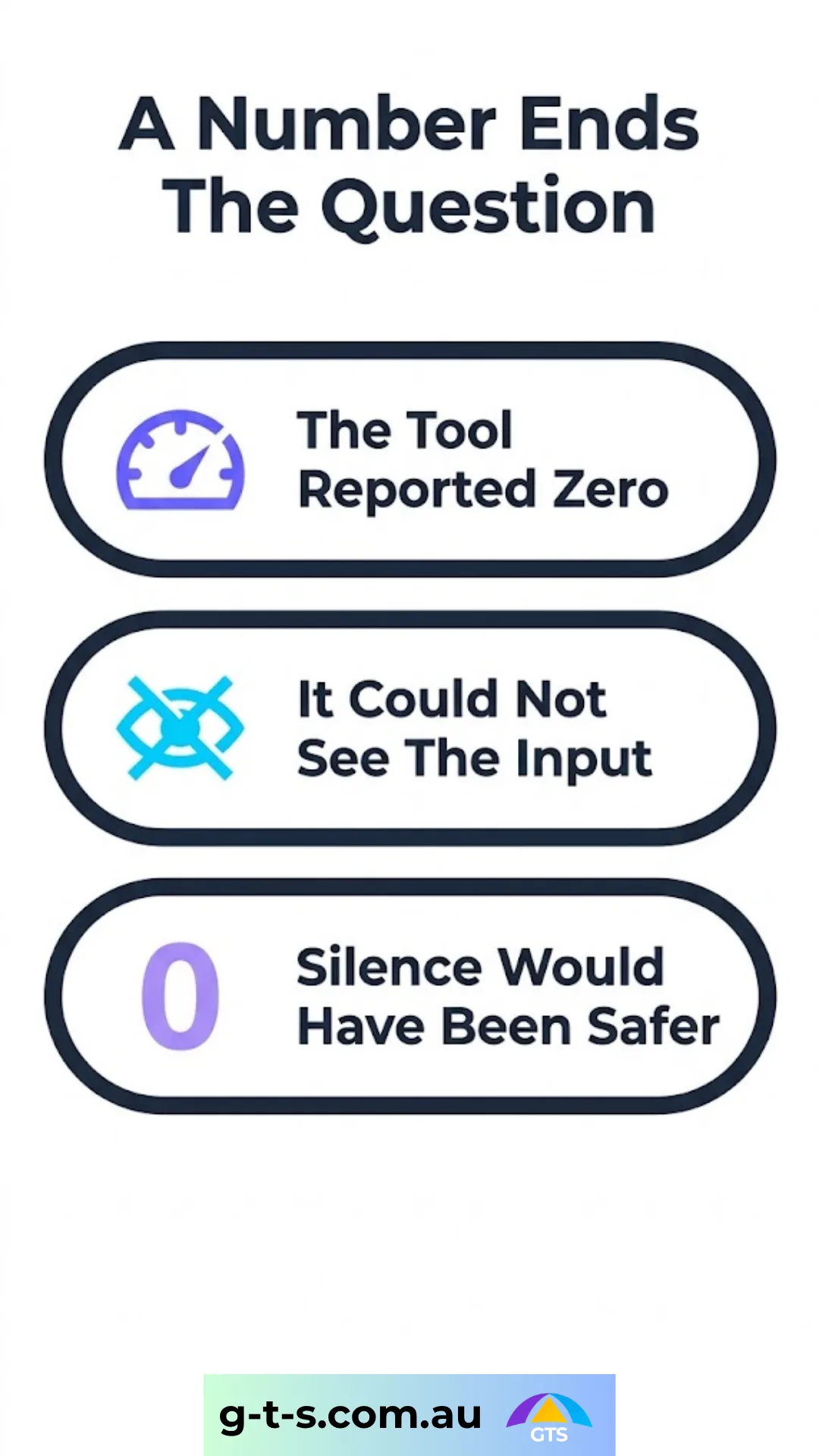
A measurement tool that reported zero because it could not see
Our link-graph tool reported no orphaned pages. It had been built on one machine and resolved repository paths in a way that worked only there. Everywhere else it found no content, counted nothing, and returned a clean result.
A tool that returns “zero problems” when it cannot find its input is worse than no tool, because silence prompts a question and a number ends one.
A workflow that could not parse, so never ran at all
A deployment step was written to skip when a credential was absent. The syntax used is not permitted in that position — it does not evaluate to false, it fails to parse, which fails the whole workflow.
The workflow had never run. Not failed. Never started.
Every route test passing through an authentication rejection
A test suite was returning 401 on every route test, because the API key was never set in the test configuration. The tests ran, exercised the auth rejection path, and reported on a product they never reached.
A redirect rule that never fired
The rule sending www traffic to the bare domain had been in place and had never applied — the platform matches those rules on path, and a hostname in the source field is not something it can match. It read like a fix and did nothing while both hostnames served the site.
And two rulers nobody was watching
Two separate measurement steps in the video pipeline had been producing numbers that no downstream step consumed. The measurement was correct. It went nowhere.
Also shipped
Analytics went onto ashganda.com, which had never had a tag at all. Trailing slashes were normalised across every internal link on that site, and BreadcrumbList schema added to every post with the redirecting URLs purged.
Brain Reset got a real brand mark — a vector in the repository, after three previous attempts had each redrawn it by eye without looking for the file. It also got an audio-coverage gate and a fix for a key collision in the slide trace.
The video composition gate gained rule 12: a deck that never advances is not a deck.
A bounce handler was corrected so that it no longer marks a contact do-not-contact merely because their address appears inside a bounced one.
The App Cost Guide lead magnet was still dated 2025. Now it is not.
What went wrong
The Brain Reset brand mark is the honest one. Three separate attempts drew the wordmark from memory, each slightly different, because nobody checked whether the repository already held the vector. It did.
That is the same failure as the narration lint from the opposite direction: one is a file that exists and is never called, the other is a file that exists and is never looked for. Both are failures to check the tree before acting on an assumption about it.
The thread
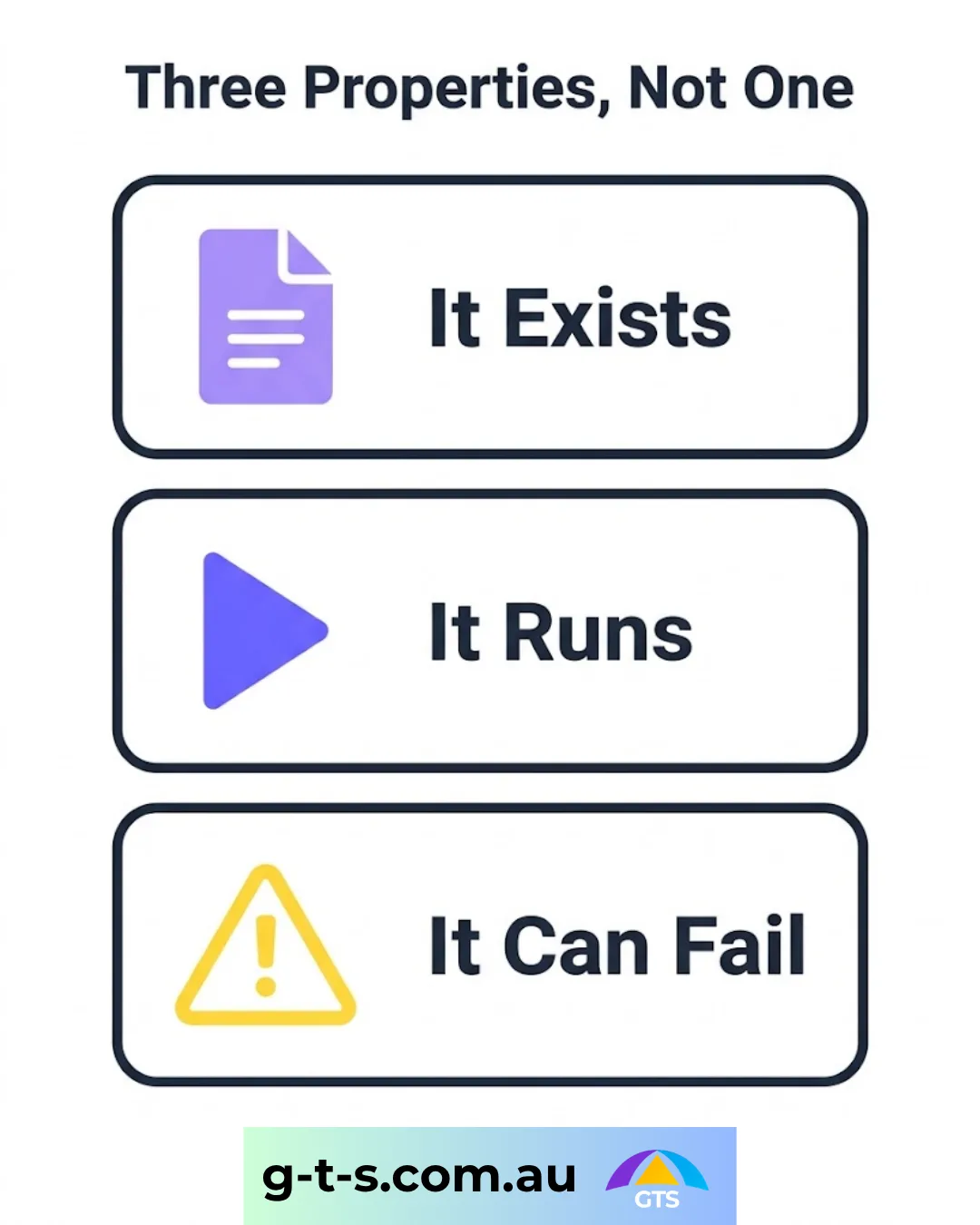
A safeguard has three separate properties, and we had been treating them as one.
It exists. Someone wrote it. It is in the repository, it has a name, and it appears in documentation.
It runs. Something on the real path actually invokes it, in the environment that matters, on the input that matters.
It can fail. When the thing it guards against is present, it says so — loudly enough that a build stops or a person reads it.
Every one of the nine findings had the first property. Most had only the first. And the first is the one that shows up in a code review, an audit, a README, and a status report.
The practical consequence for how we work: a gate is not delivered until someone has watched it go red on a real artifact. Not a synthetic test input — the actual thing production handles. A check you have never seen fail is a check you are guessing about, and eight of these nine had never been seen to do anything at all.
That is the work for the next fortnight, and the next edition is largely about what happened when we started making them fire.
Ganda Tech Services runs web, cloud, mobile and content operations for a group of Australian brands. These notes are published every fortnight, whatever they say.